Price from
AED 1.39M
Starting price for BREEZ by Danube.

New Launch
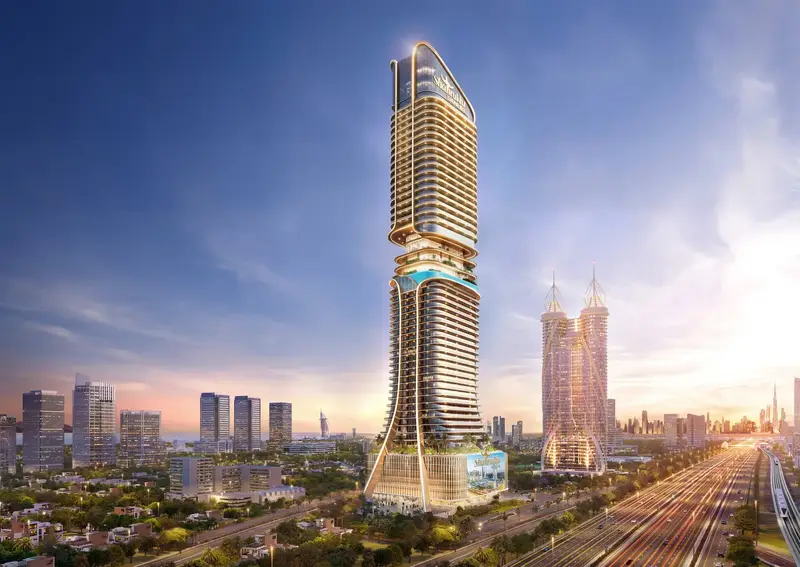
BREEZ by Danube launches 221 waterfront units in Maritime City from AED 1.39M, with studios at 36–41 sqm and one-bedrooms at 61–75 sqm.
What the current data says
Project shortlist
Get a sharper read on this launch
Data coverage
We publish what our pipeline can verify today. Gaps below are on the backlog.
Price from
AED 1.39M
Starting price for BREEZ by Danube.
Completion
Q2 2029
Tracked completion target for BREEZ by Danube.
Related projects
20
Nearby launches and other Danube projects.
BREEZ by Danube delivers 221 waterfront units to Maritime City with studio entry at AED 1.39M and a Q2 2029 handover. Observed price-per-sqm runs AED 37,950 to AED 48,571, placing this firmly in the premium bracket for a zone whose amenity infrastructure is still maturing. With 639 tracked transactions on record, institutional interest is confirmed. The selection decision requires three checks: whether compact unit sizing across 36–75 sqm matches your hold strategy, whether Maritime City's yield trajectory at this psm supports the off-plan premium over ready stock, and whether Q2 2029 aligns with your capital deployment window. Run those checks against the competing launches and Danube's wider portfolio before committing.
The 221 units across BREEZ split into two defined tranches. The first 110 units are studio format at 36.68 to 41.44 sqm, priced AED 1.39M to AED 2M — an entry psm of approximately AED 37,950, rising toward AED 48,571 at the upper range. The second 111 units are one-bedroom format at 60.99 to 74.78 sqm, priced AED 2.52M to AED 3M. These are compact, high-density layouts calibrated for the rental market rather than owner-occupier use, and buyers should assess floor area critically against comparable Maritime City inventory before treating the headline price as the key differentiator.
Total acquisition cost requires a 6% buyer-side fee on top of the unit price. On a AED 1.39M studio that adds AED 83,400 before Dubai Land Department's 4% transfer fee and standard admin charges. Budget all-in at 7–8% above the headline figure. Danube typically structures payment plans with a construction-linked schedule and a post-handover component — confirm the current plan tranche structure directly with the developer, as these terms determine effective cost-of-carry through to Q2 2029.
For current off-plan buying guidance including payment plan structures and DLD registration, independent legal advice remains essential before reservation. Buyers weighing the off-plan premium against ready-unit alternatives in Maritime City should review the Off-Plan vs Ready framework before committing capital.
Dubai Maritime City occupies a coastal strip between Port Rashid and Dubai Drydocks, approximately 7km from Downtown Dubai and within 10km of Dubai International Airport. The area is zoned freehold for international buyers and is undergoing a structural transition from its industrial maritime heritage toward a mixed-use residential and hospitality destination. That transition is the core investment thesis for BREEZ — and the core risk.
The infrastructure buildout in Maritime City is active but incomplete. Retail, F&B, and integrated transport options are thinner than in Dubai Marina, Business Bay, or even newer clusters like Dubai Creek Harbour. For a studio or one-bedroom investor, this creates a first-mover positioning argument: buying waterfront psm before the amenity layer matures typically means a lower entry price than post-maturity supply. At AED 37,950–48,571 psm, however, BREEZ is not priced as a raw land-play — the premium reflects waterfront view corridors and Danube's specification standard, which means the area's amenity trajectory needs to deliver to justify the exit valuation.
Rental yield benchmarking in Maritime City is limited by shallow comparable data. Waterfront one-bedrooms in comparable Dubai emerging zones have tracked 6–8% gross yield in active leasing cycles, but Maritime City's current lease depth does not yet support confident forward projections at these psm levels. The Maritime City off-plan pipeline is heavy across multiple developers, which compresses first-mover scarcity but confirms long-term institutional commitment to the zone.
Danube replicates its specification and payment plan formula across zones, so a portfolio comparison is almost entirely a zone-versus-zone decision. Three current Danube launches are the most relevant benchmarks.
Serenz by Danube offers an alternative zone exposure at comparable Danube specification quality. Aspirz by Danube targets a similar compact-unit buyer profile. Shahrukhz by Danube operates at a different scale and price bracket but gives a reference point for how Danube prices across its active pipeline.
The question to resolve across all three: which zone delivers the stronger capital appreciation or yield argument through the hold period to handover? Maritime City's waterfront supply constraints and institutional development activity support a credible long-term case, but buyers should verify that BREEZ's psm is not simply reflecting a short-term launch premium that comparable Danube zones are not carrying. Danube's delivery track record is a genuine risk mitigant regardless of zone — the variable is the area growth story, not the developer.
Three projects in or adjacent to Maritime City compete directly for the same buyer profile. Kanyon sits in the Maritime City corridor and competes on layout efficiency and psm. Hilton Residence brings brand-associated positioning that affects both achievable rent premiums and resale liquidity — relevant if exit strategy depends on a branded tenant profile. Il Vento targets comparable waterfront positioning with overlapping unit sizing.
Before BREEZ earns selection status, run the psm comparison across all three on equivalent floor types and view levels. If Kanyon or Il Vento deliver comparable sqm at lower psm on similar handover timelines, the BREEZ premium requires a specific justification: demonstrably superior floor levels, confirmed view corridor allocation, or a more favourable payment plan structure. deciding without that comparison risks overpaying for the Danube brand premium in a zone where competing developers are pricing aggressively.
For the full pipeline of active launches across the zone, all 20 related live projects in this corridor share the same transaction database, allowing direct psm benchmarking across launch pricing and secondary market trades.
That psm band sits at the premium end of the Maritime City off-plan market, consistent with waterfront positioning and Danube's standard specification package. Direct comparisons with [Kanyon](/projects/kanyon) and [Il Vento](/projects/il-vento) on identical floor types and view corridors are essential before treating the BREEZ psm as justified. Factor in the 6% buyer-side fee and DLD's 4% transfer charge: all-in acquisition lands 7–8% above the headline price, widening the effective cost gap versus any lower-psm competitor in the same corridor.
Danube Properties has one of the more consistent handover records among Dubai's active off-plan developers, with the majority of their completed projects landing within one to two quarters of the stated date. Q2 2029 allows approximately three years of construction runway from a 2025–2026 launch, which is a workable timeline for a 221-unit tower. Buyers should track construction progress through the Dubai Land Department's Oqood registration system as the handover window approaches, and confirm the escrow account status before signing.
At AED 1.39M entry for a 36–41 sqm studio, a 6% gross yield requires annual rent of approximately AED 83,400 — around AED 6,950 per month. Active rental comparables in Maritime City are still thin, but waterfront studios in adjacent emerging corridors have tracked AED 60,000–75,000 annually in recent leasing cycles, suggesting gross yields may compress to 4.5–5.5% at the mid-to-upper end of the BREEZ studio price range. Buyers targeting income returns should stress-test the rental assumption against current Maritime City lease listings and consider whether the one-bedroom units — with larger sqm generating stronger absolute rent — deliver a more defensible yield floor.

by Beyond
Starting from
AED 2.43M

by Prestige One
Starting from
AED 3.2M

by Kora Properties
Starting from
AED 2.45M

by Beyond
Starting from
AED 2.94M

by Danube
Starting from
AED 863K
by Danube
Starting from
AED 12.5M

by Danube
Starting from
AED 813K

by Danube
Starting from
AED 1.07M

by Danube
Starting from
AED 1.55M

by Danube
Starting from
AED 2.42M