Projects
92
92 tracked launches with Emaar Properties.
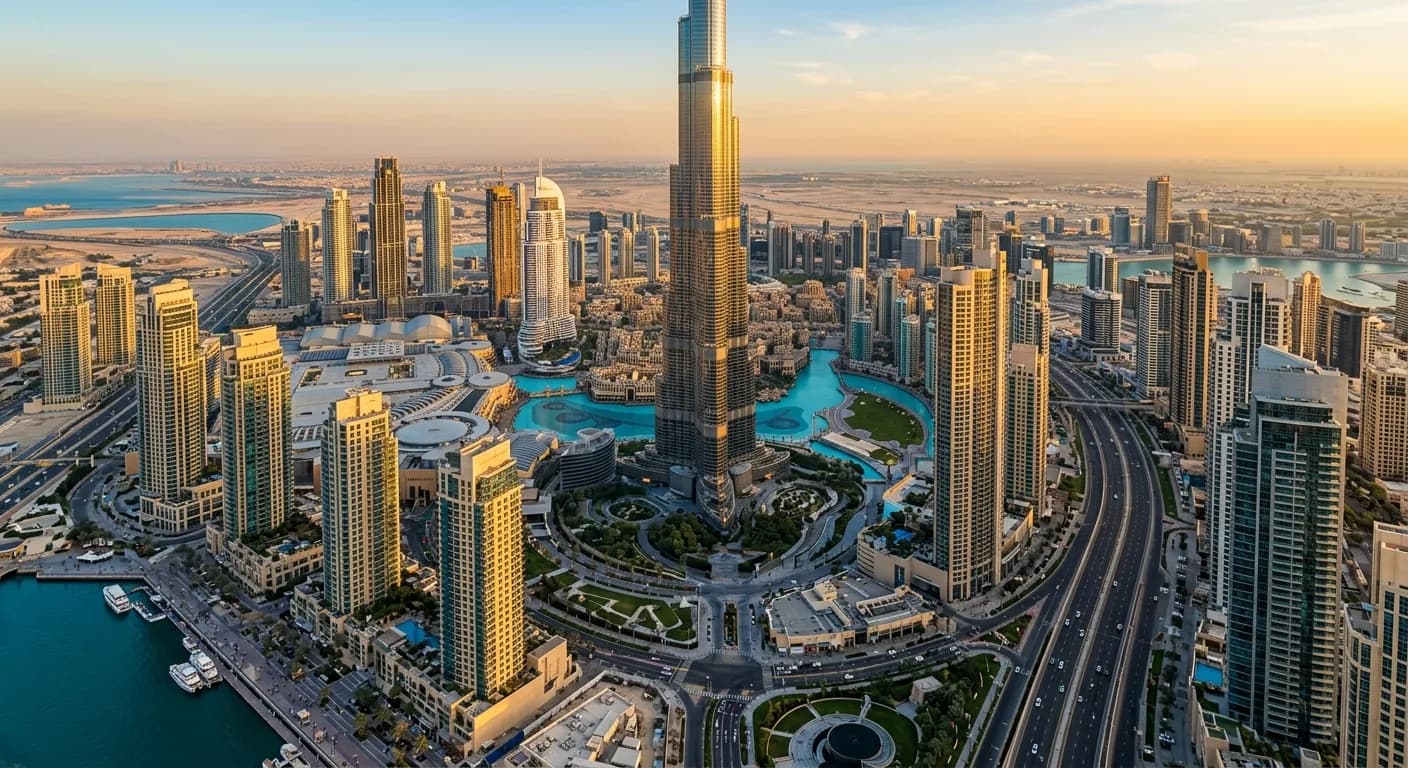
Developer Profile
Emaar Properties is Dubai's benchmark developer: 92 live projects across 15 districts, 48 launched in 2025, and a delivery record spanning Downtown Dubai,
What the current data says
Developer shortlist
Need the best-fit launches from this developer?
Data coverage
We publish what our pipeline can verify today. Gaps below are on the backlog.
Projects
92
92 tracked launches with Emaar Properties.
Areas
15
Active across 15 Dubai areas.
Price from
Price on request
Lowest tracked entry price from Emaar Properties.
Emaar Properties is Dubai's largest listed developer by revenue and the builder behind Downtown Dubai, Burj Khalifa, and the most actively traded secondary market in the city. With 92 projects currently selling across 15 active districts, the 2026 pipeline spans villa communities priced from AED 8.5 million at The Oasis to waterfront apartments at Dubai Harbour and urban mid-rise supply at Dubai Creek Harbour. Buyers comparing Dubai developers selection Emaar for its masterplan execution, DLD-verified secondary premiums, and a delivery record that no newer entrant can replicate at equivalent scale. The decision is which community and launch phase match your capital timeline.
Emaar Properties was founded in 1997 and listed on the Dubai Financial Market, making it the only major Dubai developer subject to public-company-grade financial disclosure, audit oversight, and shareholder governance. The portfolio that anchors its reputation — Downtown Dubai, Burj Khalifa, Dubai Mall, and the Dubai Fountain — represents the most visited urban district in the world by visitor count, a proof of delivery that no competing developer can match at equivalent scale or complexity. In 2025 alone, Emaar launched 48 new residential projects, driving record sales revenue and a construction backlog that confirms an active delivery machine rather than a pipeline built on paper commitments. The 92 projects currently selling span villa communities, waterfront apartments, golf-adjacent townhouses, and urban mid-rise supply, giving buyers more simultaneous product options within a single developer's guarantee than most will find across an entire selection. DLD transaction records across The Oasis confirm 20–35% secondary premiums on earlier phases, which reflects genuine investor confidence in Emaar's execution cadence rather than speculative pricing alone. For buyers evaluating developer risk as part of the capital allocation decision, Emaar's public listing, RERA-regulated escrow structure, and master community track record make it the benchmark against which all other Dubai developers should be measured.
Emaar's current concentration is strongest in Madinat Al Mataar, Mina Rashid, and Me'aisem Second, positioning the developer along Dubai's aviation, maritime, and suburban growth corridors in each case. Across 15 active areas, the geographic distribution is deliberate — each district anchors a distinct buyer profile and a different stage of masterplan maturity. Dubai Creek Harbour carries waterfront apartments in a district still building its retail and hospitality layer, making it the strongest capital appreciation play for buyers comfortable with a mid-decade horizon. Dubai Hills Estate is Emaar's most mature suburban community, with golf course access, an operational mall, and secondary market liquidity that functions like an established neighbourhood rather than a launch-phase project. Dubai Harbour hosts Bristol at Emaar Beachfront, one of the developer's most high-profile 2026 waterfront launches, targeting buyers who require both marina access and developer-grade delivery assurance. Downtown Dubai remains Emaar's flagship district, where transaction volume is among the highest in the city and rental yields on apartments consistently attract income-focused portfolio investors. The Valley in Dubailand delivers phase-by-phase townhouse supply for buyers prioritising family living at lower price thresholds, while Emaar South targets end-users and investors drawn to the Expo City employment and infrastructure corridor. The Heights Country Club and Wellness, introduced in the 2026 pipeline, signals Emaar's continued commitment to greenfield masterplan development at Dubai's expanding suburban boundary.
Emaar's 2026 launch programme is the most active in its history by project count, with 92 projects currently in sale across price points running from entry-level apartments in Emaar South to mansion-scale villas at The Oasis. Palmiera Collection at The Oasis is priced from AED 8.5 million to AED 9.18 million for villa units, reflecting the developer's push into ultra-high-net-worth residential supply within a 100-million-square-foot master community built around lagoons and landscaped open space. The Valley Phase 3 townhouses launched February 2026, offering staged payment plans for buyers seeking suburban Dubai exposure without the premium pricing of Dubai Hills or Beachfront. Grand Polo Club and Resort targets buyers who prioritise amenity-led, lifestyle-branded communities over pure yield metrics. Bristol at Emaar Beachfront continues the developer's waterfront expansion programme, with pricing available on request from registered agents. Terra Woods at Expo City represents Emaar's most accessible current entry point in the Expo corridor and is the strongest starting point for buyers new to the Emaar portfolio. Fior1 By Emaar and Palmiera Collective each offer distinct positioning across the developer's broader 2026 release schedule. fee across Emaar's off-plan portfolio runs 2–5%, paid by the developer on primary sales with no buyer-side brokerage cost on direct purchases. Verified price floors across the full portfolio are project-specific; buyers should confirm live launch pricing with a registered agent before deciding units.
Emaar's delivery record is the strongest structural argument for deciding the developer ahead of any comparable alternative. Completed masterplan communities including Dubai Hills Estate, multiple phases of The Valley, the full Emaar Beachfront scheme, and the entire Downtown Dubai district demonstrate that Emaar builds and hands over at scale — not sequentially across decades, but in parallel across multiple active masterplans simultaneously. The Oasis, with earlier phases already recording 20–35% DLD-verified secondary premiums, is the clearest current signal that the market is pricing in delivery confidence rather than applying the discount that attaches to developer-stage risk. For buyers entering the 2026 launch cycle, estimated completion windows vary by project: newer Oasis and Valley phases carry projected handover in the 2027–2029 range, while select Emaar Beachfront and Dubai Creek Harbour apartments are closer to delivery. All Emaar off-plan projects operate under full RERA and DLD oversight, with buyer funds held in escrow and construction milestones linked to payment schedule releases — the standard framework applied across all licensed Dubai developers. The distinction for Emaar buyers is that the developer has met those milestones across 25 years of projects with complexity and capital scale that most competitors have never approached.
The most frequently contested comparison in Dubai's off-plan market is Emaar against DAMAC, and the distinction is structural rather than cosmetic. Full analysis is available in the Emaar vs DAMAC breakdown, but the core decision point is this: Emaar invests in masterplan infrastructure — golf courses, operating malls, waterways, schools, and community retail — and that infrastructure drives secondary premiums as each district matures. DAMAC has concentrated its recent growth on branded tower supply with faster sales cycles, more aggressive post-handover payment plans, and brand partnerships that generate immediate buyer interest without the same long-cycle infrastructure commitment. For capital appreciation buyers with a five-year or longer horizon, Emaar's masterplan communities have consistently generated compounding secondary premiums as infrastructure completes, a cycle that repeats with each new district launch. DAMAC's branded towers have shown stronger short-cycle speculative interest but less consistent resale depth in established secondary markets. On developer risk, Emaar's DFM listing and public financial reporting reduce counterparty risk in ways that private developers structurally cannot. On price entry, DAMAC frequently offers lower floor pricing and extended post-handover payment structures that appeal to buyers optimising for cash flow over capital gain. Buyers prioritising infrastructure-backed appreciation in a named, operating community will consistently find Emaar's offer more defensible. Buyers running yield-focused strategies on tighter capital should model both developers across comparable districts before committing to either.
Early phases of The Oasis in Dubailand have already recorded 20–35% secondary premiums per DLD transaction data, meaning entry pricing on newer 2026 phases is structurally higher than 2023–2024 launches. Buyers seeking maximum upside should model resale availability in Phase 1 and Phase 2 before committing to new-launch pricing in the current cycle. Newer phases offer longer payment plans and developer support but compress the margin that early buyers have already captured. The right answer depends on whether you are optimising for yield, capital gain, or payment plan flexibility.
Emaar's off-plan projects register with Dubai Land Department and hold buyer funds in RERA-regulated escrow accounts, the same regulatory framework applied across all licensed Dubai developers. The structural advantage Emaar carries is its public listing on the Dubai Financial Market, which imposes financial disclosure, audit, and governance requirements that private developers do not face. fee on Emaar off-plan typically runs 2–5%, paid by the developer on primary sales, with no additional buyer-side brokerage cost. For buyers weighing developer risk, the combination of DFM listing, escrow compliance, and 25 years of completed masterplan delivery makes Emaar the lowest-risk large-scale developer currently active in Dubai.
Secondary market activity in [Dubai Hills](/areas/dubai-hills) townhouses, [Dubai Creek Harbour](/areas/dubai-creek-harbour) apartments, and completed Valley phases consistently outperforms comparable product from competing developers, driven by genuine end-user demand rather than speculative turnover. Downtown Dubai remains Emaar's deepest secondary market by transaction volume, with rental yields on apartments that attract portfolio investors seeking stable income rather than development-stage risk. For buyers entering the 2026 launch cycle, the lesson is straightforward: buying into an Emaar masterplan that already has handed-over phases reduces the liquidity risk that affects newer or single-project developers when market conditions shift.
Showing 12 of 92 tracked launches for Emaar Properties, ordered by strongest districts first.

by Emaar Properties
Starting from
AED 1.78M

by Emaar Properties
Starting from
AED 1.79M

by Emaar Properties
Starting from
AED 1.81M

by Emaar Properties
Starting from
AED 1.81M

by Emaar Properties
Starting from
AED 1.92M

by Emaar Properties
Starting from
AED 2.39M

by Emaar Properties
Starting from
AED 2.68M

by Emaar Properties
Starting from
AED 2.98M

by Emaar Properties
Starting from
AED 3.2M

by Emaar Properties
Starting from
AED 3.25M

by Emaar Properties
Starting from
AED 4.34M

by Emaar Properties
Starting from
AED 1.7M